-
WhatsApp / Mob : +86 156 5177 2521
-
이메일 : mrwin@cnbangwin.com
WhatsApp / Mob : +86 156 5177 2521
이메일 : mrwin@cnbangwin.com

VPSA Oxygen Concentrator for Industrial Oxygen Generation
Feb 10 , 2026l Introduction to VPSA Oxygen Concentrator
l What Is a VPSA Oxygen Concentrator
l Why VPSA Oxygen Concentrators Matter
l How a VPSA Oxygen Concentrator Works
l VPSA Oxygen Concentrator vs PSA Systems
l Oxygen Purity and Output Capacity
l Industrial Applications of VPSA Oxygen Concentrators
l Energy Efficiency and Operating Cost
l Control Systems and Automation
l Safety and Engineering Standards
l System Design and Customization
l Installation, Operation, and Maintenance
l Internal Resources for Oxygen Solutions
l External Industry References
l Frequently Asked Questions
6 Steps to Understanding VPSA Oxygen Concentrators
The Problem with Rising Oxygen Needs
Industrial oxygen requirements are increasing around the world.
Companies need a reliable source of oxygen to keep up.
Gas cylinder delivery can create logistical headaches.
Liquid oxygen trucks are expensive in the long run.
What if there was a way to produce oxygen on-site?
You could eliminate or reduce reliance on others.
You’ll have more control over your budget and supply.
VPSA oxygen concentrators can now meet high oxygen demands.
Let’s start with the basics. VPSA stands for vacuum pressure swing adsorption.
VPSA oxygen concentrators produce oxygen by separating it from the air.
The process involves selectively removing nitrogen from the air.
Adsorbent materials trap nitrogen molecules from the air.
Concentrated oxygen is the gas that comes out of the system.
Vacuum assisted regeneration allows for quick renewing of the adsorbent.
Many industries use oxygen in some capacity.
The steel industry uses oxygen to increase combustion rates.
Glass manufacturers use oxygen to fuel their production towers.
Chemical companies use oxygen in oxidation reactions.
If you experience an oxygen outage, you lose production time.
A VPSA oxygen concentrator can provide you with a constant supply.
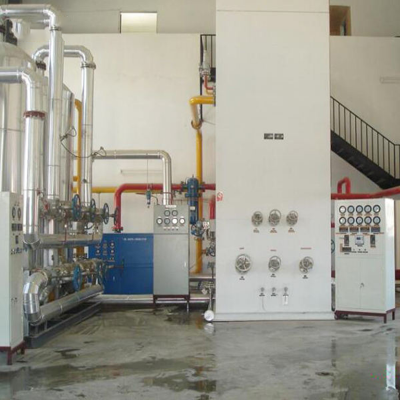
Air from the surrounding environment is drawn into the system through an air compressor. The air then goes through a filtration process to remove dust particles and moisture. After air is filtered, it goes into a tower known as an adsorption tower.
Inside the tower, there are adsorbent beds. As air passes through these towers, the nitrogen molecules are adsorbed by the beds. What remains is a high concentration of oxygen, also known as product gas. Vacuum pumps then decrease the pressure in the towers to regenerate the adsorbent beds. A control valve switches between towers while the other regenerates. By doing this, you can maintain a constant supply of oxygen.
PSA oxygen concentrators also produce oxygen from ambient air.
That means the only difference between VPSA and PSA is vacuum regeneration.
Vacuum regeneration lowers the pressure in the system.
Compressors don’t have to work as hard to maintain low pressure.
As a result, VPSA systems have less energy consumption.
VPSA machines can handle larger oxygen capacities than PSA.
That is why VPSA systems are ideal for industrial oxygen production.
VPSA oxygen concentrators produce oxygen with a purity between 90% and 95%.
The concentration of oxygen makes it ideal for industrial use.
The output capacity of these machines range from medium to extra large.
We can build a plant to fit your needs.
Also, built-in sensors will ensure that your oxygen concentration stays within range.
VPSA oxygen concentrators have various industrial uses:
l Producing steel or other metals
l Making glass
l Chemical plants
l Treating wastewater
l Supplying oxygen to aquaculture tanks
l Paper pulp processing
…and others which need a range of flow and purity levels.
That’s why configuring a system properly is important.
A primary reason customers choose VPSA oxygen concentrators.
The VPSA process lowers compression energy demand.
Vacuum side regeneration allows greater adsorbent utilization.
Decreased energy usage means operating costs will be lower.
Operating expenses are already moderate because maintenance is moderate.
Which means total cost of ownership will be attractive.
Which appeals to industrial users that use equipment for years.
VPSA oxygen concentrators can be outfitted with PLC control.
Pressure, flow, and purity can all be monitored by operators.
User friendly touchscreen panels make operating the system easy.
Systems can even be monitored remotely to allow for preventative maintenance.
Operators can be alerted to problems with alarms.
Decreasing the chance of downtime.
Strict control is required when handling oxygen.
It promotes burning if there is too much oxygen.
Ventilation is still needed to avoid that hazard.
Valves and other components have pressure release devices.
Flammable material won't ignite because of material selection.
Engineering requirements eliminate all safety risks.
An oxygen system design layout should be customized for each project.
There are many site-specific factors that affect the layout of your system.
Supply voltage is determined by electrical conditions on site.
An oxygen plant can be expanded by adding modules.
Multiple stage logic sequence can be utilized to match production needs.
Customization options provide better value over the lifetime of the system.
Systems should be professionally installed to reduce downtime.
Compressor selection will help increase efficiency.
Vacuum pump sizing can reduce bed runtimes during regeneration.
Filters should be maintained by replacing them often.
Valves will require maintenance to check that they are switching.
Maintaining your system will greatly increase the life of your system.
For deeper understanding, explore related resources:
VPSA Oxygen Plant Systems https://www.bangwingas.com/vpsa-oxygen-plant_c15
For broader technical context, review:
Oxygen production overview https://en.wikipedia.org/wiki/Oxygen_production
What is VPSA oxygen concentrator?
Oxygen concentrator that produces oxygen from air using vacuum pressure swing adsorption technique.
What purity level of oxygen can be produced by VPSA systems?
Typically these systems offer oxygen purity ranging from 90% to 95%.
Are VPSA oxygen concentrators energy efficient?
Yes, Vacuum swing adsorption results in lesser energy consumption by the compressor.
Where VPSA oxygen concentrators are used?
Steel industry, glass industry, chemical industry and water treatment plants typically use these oxygen concentrators.





 IPv6 네트워크 지원